Neurodiversity

The games industry is full of neurodivergent people. Most studios aren't built for them.

I help studios understand what that means, why it matters, and what practical changes make a real difference — for their people and for the games they make.

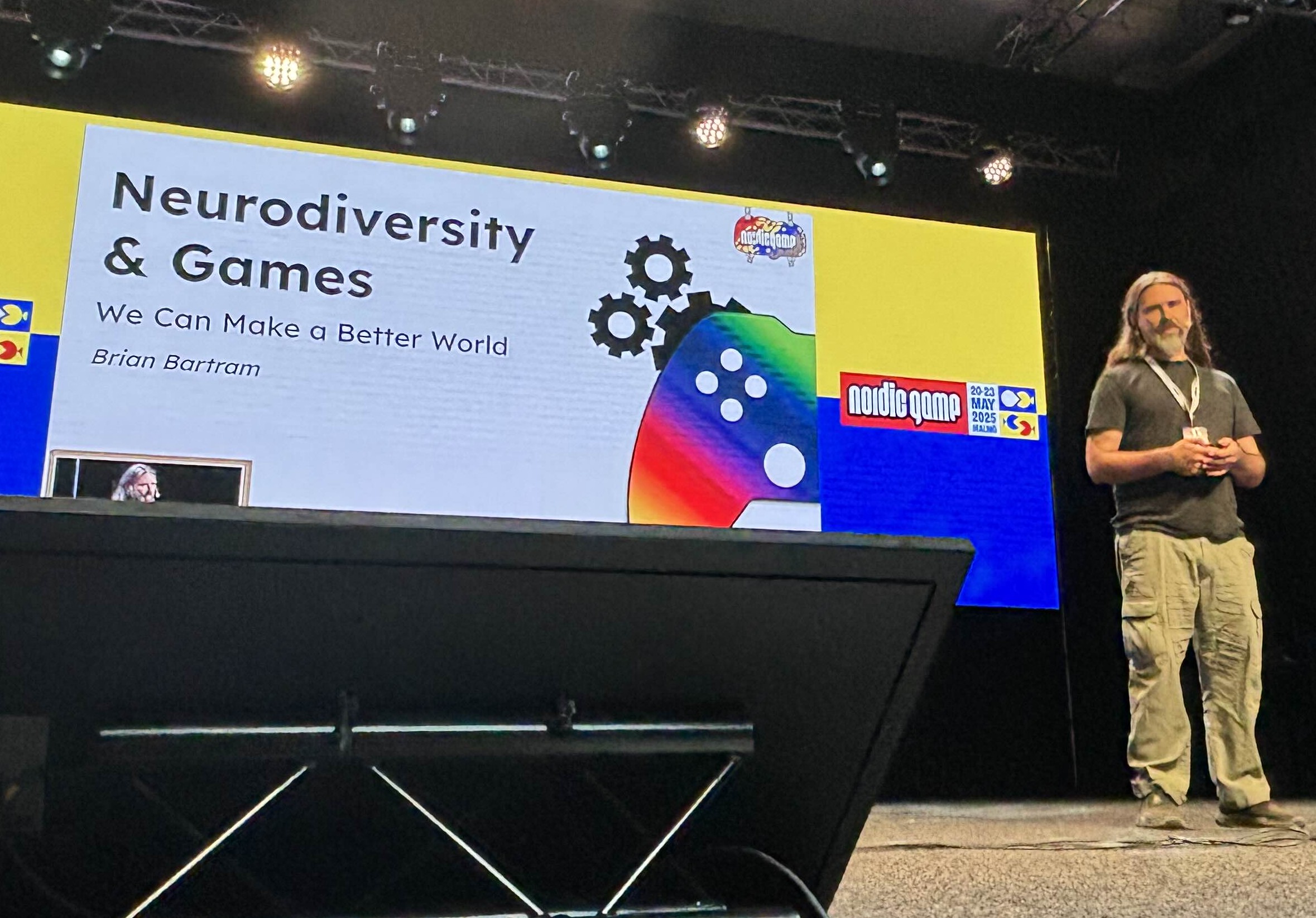
Brian Bartram
The context

Why this matters for game studios

Research consistently shows that neurodivergent people — those with ADHD, autism, dyslexia, dyspraxia, and related differences — are significantly overrepresented in creative and technical industries, including game development.

That's a strength. Neurodivergent thinking brings pattern recognition, lateral problem-solving, deep focus, and creative leaps that neurotypical teams often struggle to replicate.

But studios that don't understand neurodiversity often lose those people — through burnout, miscommunication, processes that don't fit how they work, and cultures where masking is the only option. The cost is human and commercial, and it's largely preventable.

"This isn't an area I came to through research alone. I've experienced first-hand what it's like when a studio gets this right — and when it doesn't."

My approach is practical, not theoretical. I'm not here to deliver a compliance training or hand you a policy document. I'm here to help your studio actually change how it works.

What I offer

Ways to work together

These are starting points. Most engagements end up being a combination of the below, shaped around what your studio actually needs.

Awareness workshops

A practical introduction to neurodiversity for whole teams. What it is, what it looks like in a studio environment, and what small changes can make a meaningful difference. Designed to open conversations, not close them.

See workshops

Studio culture review

A closer look at how your studio works — communication patterns, meeting structures, onboarding, documentation, and the unwritten rules that shape daily life. Identifying what's working, what isn't, and why.

See consulting

Games and accessibility

Supporting studios to think about neurodivergent players in their design — not just as an accessibility checkbox, but as an opportunity to make games that work better for a much wider range of people.

Enquire

How these engagements work in practice

A game development team in a neurodiversity awareness session, discussion in progress

For your team

Working with your people

Most of this work starts with the team — understanding the current culture, what's helping people do their best work, and what's getting in the way.

That might mean running an awareness workshop, sitting in on team rituals, reviewing how you communicate and document, or just having honest conversations about what the experience of working at your studio is actually like.

Format
Workshops, interviews, observation
Output
Findings, recommendations, follow-on support
Duration
Flexible — from a single session to ongoing
A game interface designed with clear visual hierarchy and accessibility in mind

For your games

Neurodiversity in the work itself

Beyond the studio culture, there's the question of the games you're making. How do they serve neurodivergent players? Where do they create friction or confusion that better design could remove?

This isn't a specialist accessibility audit — it's a design conversation grounded in how neurodivergent people actually experience games. Often the changes that help the most are small, and they improve the experience for everyone.

Format
Design review, play sessions, written feedback
Good for
Games in development or pre-launch
Duration
Usually 1–2 weeks for a focused review
A note

This work takes honesty

Studios that get the most out of this kind of engagement are ones that are willing to look honestly at how things are working — not just confirm what they already believe.

That's not always comfortable. But it's the only way to make changes that actually stick. I'll be honest with you about what I find, and I'll work alongside you to do something useful with it.

If you're neurodivergent yourself and looking for support in your own career or working practice, I'm happy to talk about that too. Get in touch and we'll figure out whether I can help.

Want to talk about this?

Whether you have a specific situation in mind or just want to understand what's possible, I'm happy to have an initial conversation.

Get in touch